 |
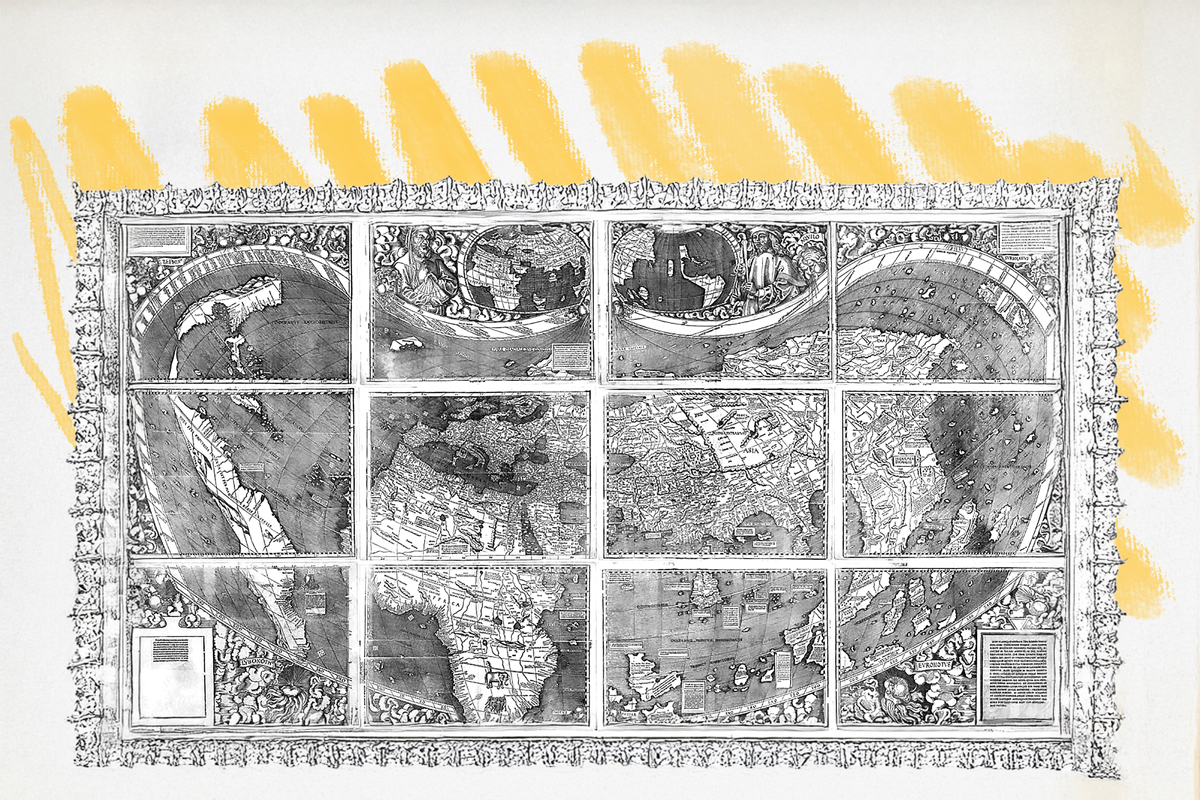
The first world map to mention 'America' was published in 1507. |
Science & Industry |
 |
| |
The two men drew on Portuguese nautical data and letters attributed to Florentine explorer Amerigo Vespucci to create the map. Though it later emerged they were doctored, the letters appeared to argue that Vespucci had found an entirely new landmass, not the eastern edge of Asia, as Christopher Columbus believed. Waldseemüller and Ringmann agreed with this idea — and in an accompanying book, Cosmographiae Introductio, they proposed naming this "fourth part" of the world "America," after Vespucci's Latinized first name, Americus. | |
Though Waldseemüller later dropped the name from his maps, others embraced it. When cartographer Gerardus Mercator applied the name "America" to the entire Western Hemisphere in 1538, it quickly became standard. | |
Only one copy of Waldseemüller's 1507 map survives today — discovered in a German castle in 1901 and now housed at the Library of Congress in Washington, D.C. Sometimes called "America's birth certificate," it marks the moment when a new name — and a New World — entered the map of human understanding. |
| By clicking a link in this email, you're agreeing to our Terms of Use and Privacy Policy. |
Thank you for supporting our advertisers! | ||
 | |||||||||
By the Numbers | |||||||||
| |||||||||
| |||||||||
| |||||||||
| |||||||||
No one knows for sure where the word "Asia" comes from. | |||||||||
No one knows exactly where the word "Asia" comes from. The name is ancient, and its meaning has been lost to time. The ancient Greeks used it to describe the lands east of their homeland, but they may have borrowed it from older sources. Some scholars link it to the Akkadian word asu, meaning "east" or "land of the rising sun." Others point to Assuva or Asuwa, a region in western Anatolia first mentioned by the king of the Hittites in 1235 BCE. It could also come from a local name in what is now Turkey that gradually expanded to the territory of Asia Minor — eventually coming to describe an entire continent. | |||||||||

Thank you for supporting our advertisers! | ||
| |||
Recommended Reading | |||
 | |||
Arts & Culture | |||
| |||
 | |||
Science & Industry | |||
| |||
| + Load more | |||
| |||||||||||||||||||||||||||||||||||||||||||||||||||||||








| |||||||||
| 325 North LaSalle Street, Suite 200, Chicago, IL 60654 | |||||||||
|


Ni komentarjev:
Objavite komentar