torek, 9. december 2025

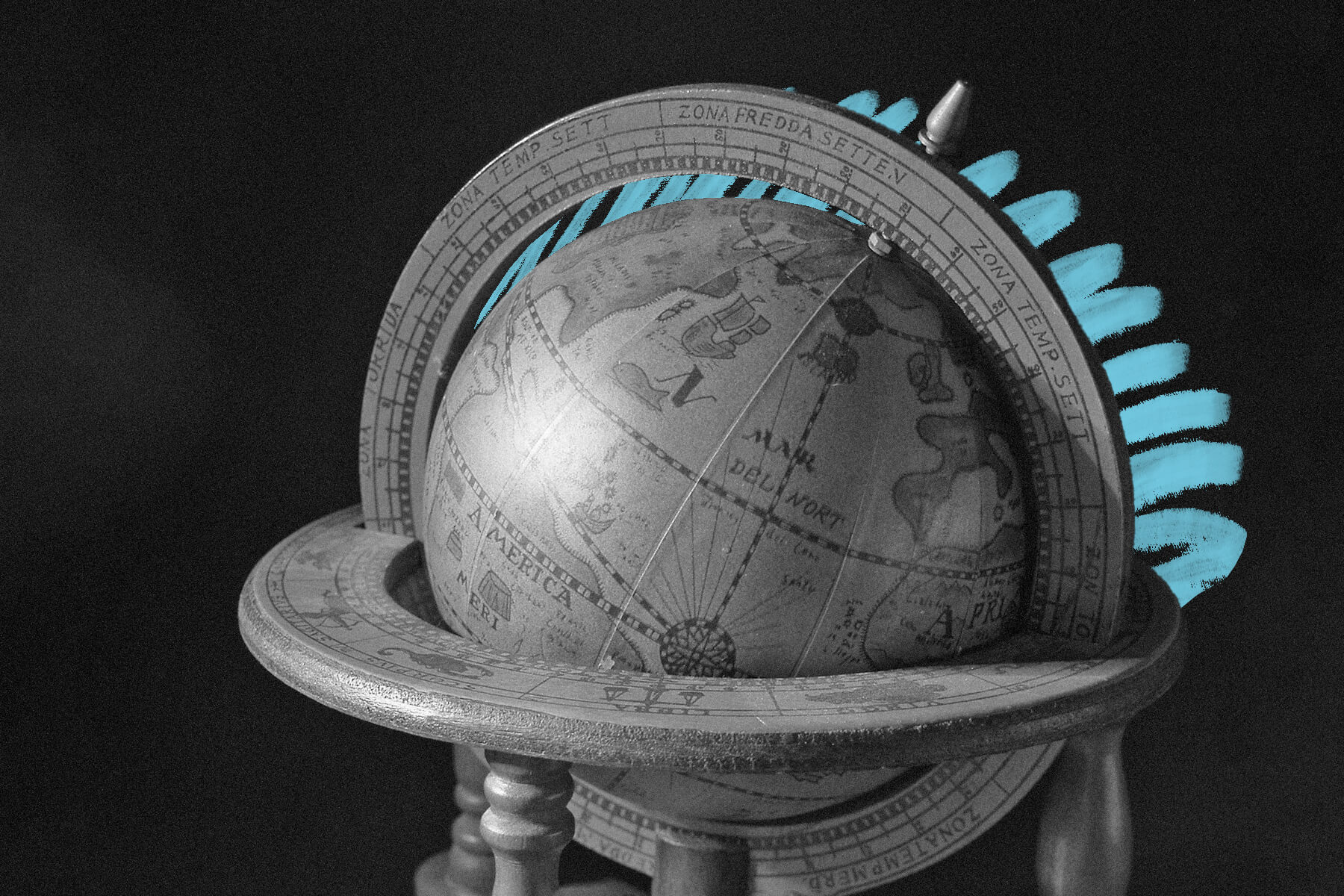
When did Earth get its first ocean?

Today, the global ocean makes up the majority of the Earth's surface — but the massive body of water wasn't always there.

Earth didn't always have an ocean.

Science & Industry

T oday, the global ocean makes up the majority of the Earth's surface — but the massive body of water wasn't always there. For the first billion or so years of the planet's existence, the surface was simply too hot for water to be anything but vapor. Around 3.8 billion years ago, the temperature finally dropped below water's boiling point of 212 degrees Fahrenheit, and the vapor turned into rain. It showered for centuries, filling the deepest points on the planet's surface and building up moisture in the atmosphere. This was essential for life developing on Earth; the first single-celled microbes appeared in the ocean around 3.5 billion years ago.

Scientific opinion is mixed about how the vaporized water got there in the first place. One theory is that the first water emerged from inside the Earth as part of the volcanic activity that covered the surface. Another is that icy comets hit the Earth, bringing water with them. Water also may have arrived as part of the massive planetary collision that created the moon — or maybe it was a combination of all three. Today, our planet is in the perfect zone for water solids, liquid, and gas to form: A little closer to the sun and all we'd have is vapor, whereas a little farther away there would be no vapor at all. 

By the Numbers

Percentage of the Earth's ocean that hasn't been mapped

80%

Named regions of the ocean (Pacific, Atlantic, Arctic, Indian, and Antarctic)

5

Known species that live in the ocean

226,000

Percentage of the Earth's water contained in the ocean

97%

Did you know?

There were multiple continents before Pangea.

The seven continents that make up the land on Earth today — Asia, Africa, North America, South America, Antarctica, Europe, and Australia (or Oceania) — were once all part of a supercontinent called Pangea, which split up around 200 million years ago. But before Pangea, there were separate landmasses: Gondwana, which contained South America, India, Africa, Australia, and Antarctica; Euramerica or Laurussia, which contained North America and Europe; and Siberia. These all collided between 250 million and 300 million years ago to create the supercontinent.

Recommended Reading

U.S. History

What Was America's First Suburb?

Science & Industry

What Did People Use for IDs Before Photos?

+ Load more

Discover something new

History Facts is part of Inbox Studio, which publishes content that uplifts, informs, and inspires.

13 Surprising Facts About the World's Population
Interesting Facts

Natural Cold Remedies That Actually Work
Better Report

Why Do Brits Spell "Colour" With an "ou"?
Word Smarts
Click here

Ni komentarjev:

Objavite komentar