torek, 27. januar 2026

‘O Canada’ has two totally different versions

Canada has two official languages — English and French — so it makes sense that it would also have two national anthems.

The English and French versions of 'O Canada' have totally different lyrics.

World History

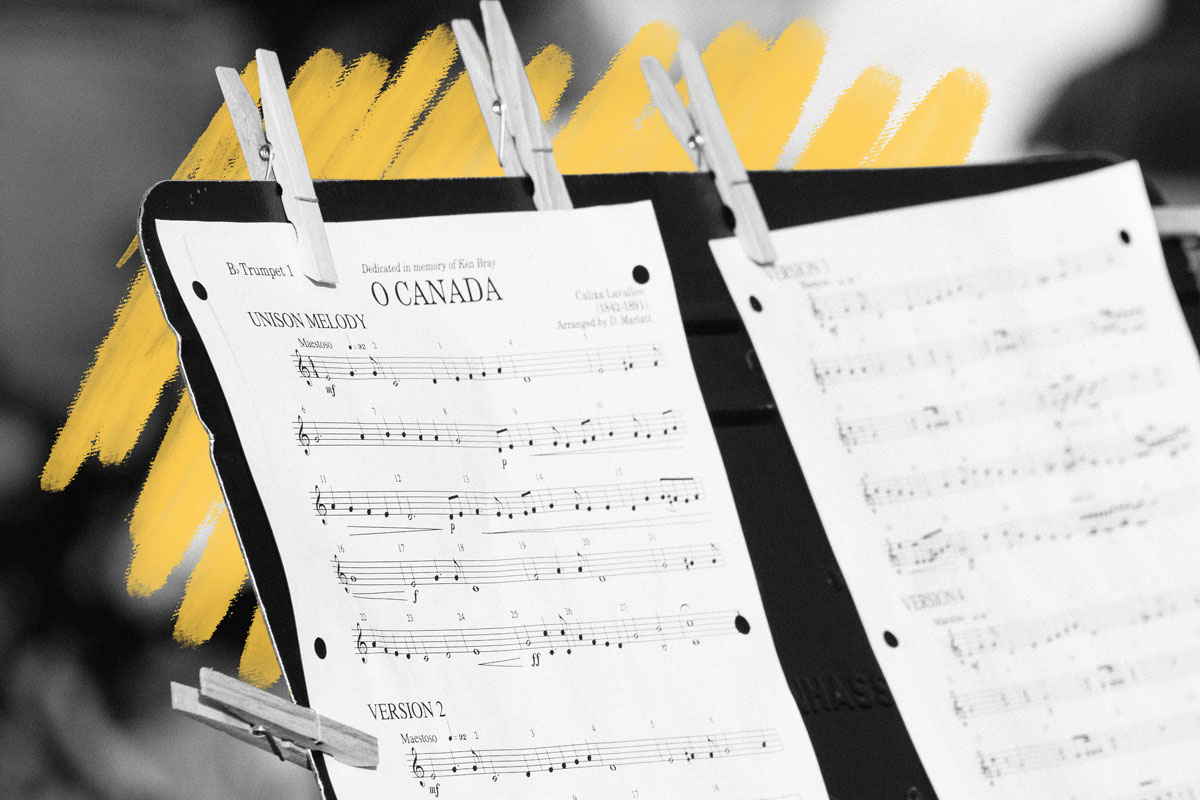
C anada has two official languages — English and French — so it makes sense that it would also have two national anthems. But rather than being direct translations of each other as you might expect, the two versions of "O Canada" are different poems set to the same melody. 

The first few lines of the English version are "O Canada! / Our home and native land! / True patriot love in all of us command. / With glowing hearts we see thee rise, / The True North strong and free!" When translated, the French version opens as follows: "O Canada! / Land of our ancestors / Glorious deeds circle your brow / For your arm knows how to wield the sword / Your arm knows how to carry the cross."

The French version came first, when Théodore Robitaille, the lieutenant governor of Quebec, commissioned it for Saint-Jean-Baptiste Day in 1880. Adolphe-Basile Routhier wrote the lyrics, with Calixa Lavallée composing the music. The lyrics were translated to English a few times, but none of the translations stuck. The English-language version that gained the most traction, written by Robert Stanley Weir, wasn't a translation at all but rather an entirely new set of lyrics. 

Though the French version of "O Canada" has never been changed, the English one has been updated three times, most recently in 2018, when the words "in all thy sons command" were changed to "in all of us command" to be inclusive of the women who have fought for Canada.

By the Numbers

Provinces and territories of Canada

13

Country in the world larger than Canada by area (Russia)

1

Coldest temperature (in degrees Fahrenheit) ever recorded in Canada

-81.4

Canadian prime ministers since the office was established in 1867

24

Did you know?

The Netherlands has the world's oldest national anthem.

Though it didn't officially become the Dutch national anthem until 1932, "Wilhelmus van Nassouwe" was first written between 1568 and 1572 — making it the oldest national anthem in the world. Its 15 stanzas pay tribute to William I, also known as William the Silent, who led the Dutch Revolt to establish independence from Spain. Only the first verse of "Wilhelmus" (as it's commonly known) is always sung, though sometimes the sixth is as well. The anthem is also an acrostic, with the first letters of its 15 stanzas spelling out "Willem van Nassov," an alternate spelling of the leader's name that was common when the song was written.

Recommended Reading

Arts & Culture

7 of History's Costliest Typos

Arts & Culture

6 Childhood Games Only Baby Boomers Will Recognize

+ Load more

Discover something new

History Facts is part of Inbox Studio, which publishes content that uplifts, informs, and inspires.

13 Surprising Facts About the World's Population
Interesting Facts

Natural Cold Remedies That Actually Work
Better Report

Why Do Brits Spell "Colour" With an "ou"?
Word Smarts
Click here

Ni komentarjev:

Objavite komentar