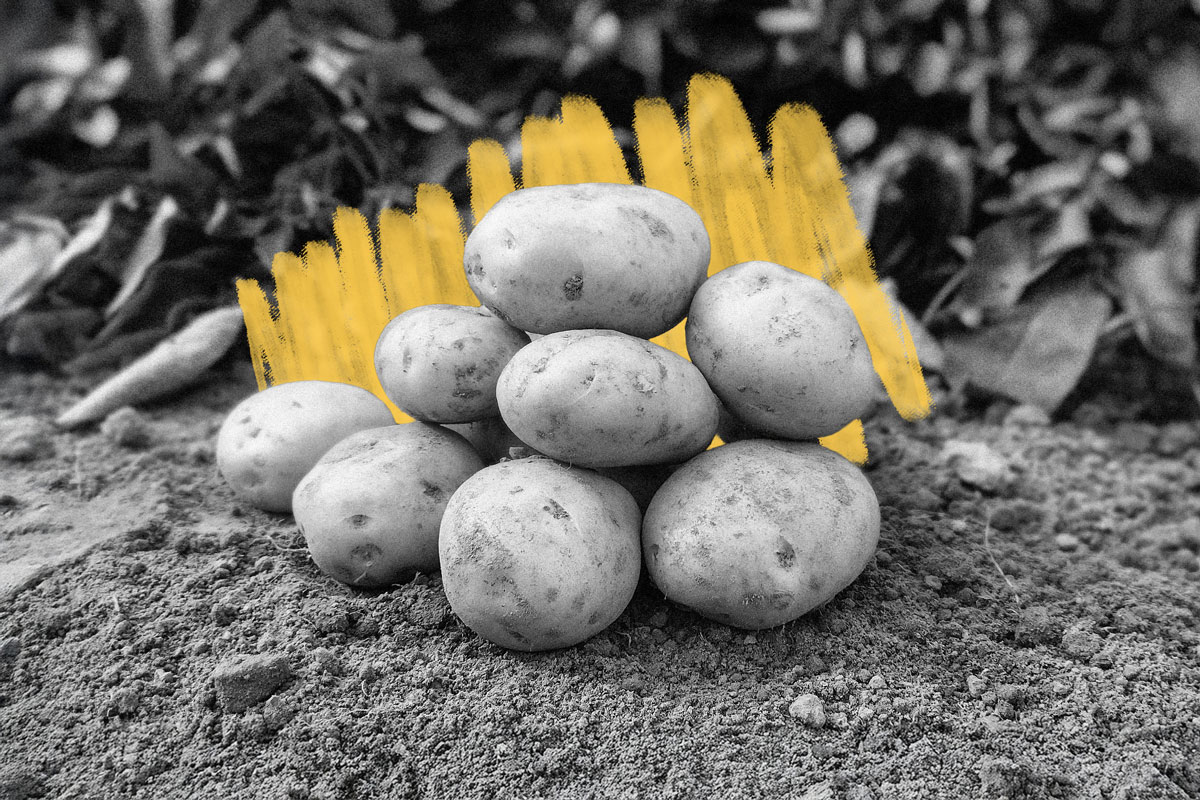
P eople have historically behaved irrationally when they're of the belief that witches are about. In addition to holding trials and inspiring plays by Arthur Miller, the denizens of the past once went so far as to ban the humble potato because they believed it was linked to witchcraft. |
|
|
Everyone's favorite tuber originated in the Americas and wasn't introduced to Europe until the late 16th century, at which time potatoes were looked upon with fear and suspicion. Botanists identified the tubers as members of the poisonous nightshade family, leading to their association with devil worship and witchcraft. (While potatoes belong to the same family as deadly nightshades, they do not contain the same toxins.) They also aren't mentioned in the Bible, which some religious thinkers of the time interpreted as a sign they weren't meant to be eaten. |
|
All of that was enough for France's Parliament to outlaw potatoes from 1748 until 1772, when King Louis XV overturned the ban. The king was persuaded by a medical officer by the name of Antoine-Augustin Parmentier, who was fed little else during his time as a prisoner of war and found his confinement surprisingly tasty and nutritious. |
|
Elsewhere in food-related superstitions, Europeans spent centuries depriving themselves of tomatoes because they believed that tomatoes were poisonous. The pewter plates tomatoes were sometimes eaten on contained lead that was leached by the fruit, resulting in the misconception. |

















Ni komentarjev:
Objavite komentar