Today: Ranking realignment moves, CBB stock report, hot seat watch, and the cost of softer schedules. |
|
|
 | ~7.5 minute read (1,735 words) | | |
|
|
Ranking the conference realignment moves of the 2010s |
While we were all hypothesizing about more realignment moves, Bill Moos was trying to make one. The former Nebraska athletic director revealed in his new book that he secretly attempted to get Nebraska out of the Big Ten and return to the Big 12. The idea never came close to reality because Moos lacked the necessary support, though then-Nebraska system president Ted Carter — now Ohio State's president — backed exploring it. That revelation serves as a reminder of the realignment wave of the 2010s and raises a fair question: With 10-15 years of hindsight, which moves actually worked? Here is a ranking of the top moves from that era. 1. Texas A&M: Big 12 to SEC Texas A&M forged a new identity in the SEC, jump-started by Johnny Manziel's Heisman Trophy season in 2012. The Aggies did not become a perennial national title contender, but they have been an above-average SEC program and could rise further in the Mike Elko era. The move pulled A&M out of Texas' shadow, even if the Longhorns reclaimed bragging rights with a three-game winning streak dating to the final Big 12 meeting in 2011. 2. Utah: Mountain West to Pac-12 Utah produced the most consistent success among former Group of 5 programs that jumped to power conferences. The Utes built depth and won two of the final three Pac-12 titles before the league's collapse. We'll see how much of the success was due to Kyle Whittingham, but the Utes under successor Morgan Scalley seem capable of competing regularly in the Big 12, where they landed when the old Pac-12 broke up. 3. TCU: Mountain West to Big 12 TCU spent years wandering through conferences after the Southwest Conference dissolved, moving from the WAC to Conference USA to the Mountain West and briefly heading toward the Big East before landing in the Big 12. Gary Patterson had the Horned Frogs atop the league in their third season, and Sonny Dykes led them to the 2022 national title game. Alongside Utah, TCU stands as a major success story of upward mobility. 4. Missouri: Big 12 to SEC Missouri's move initially seemed like an awkward fit, but it aged remarkably well. The Tigers reached the SEC title game in their second season. After struggles following Gary Pinkel's retirement, Eli Drinkwitz has stabilized the program. Put it this way: No one in a position of authority at Missouri was calling anyone in the Big 12 about a potential return at any point. 5. Louisville: American to ACC Louisville transitioned smoothly into the ACC, aided by Lamar Jackson's star power. The football program weathered coaching changes and now thrives under Jeff Brohm, who has won 28 games in three seasons and reached an ACC title game. In basketball, the Cardinals rebounded from a post-pandemic downturn and are back in NCAA Tournament contention under Pat Kelsey. See the full top 10 ranking from Andy Staples here. |
|
|
2026 NCAA Tournament bubble watch sees SEC teams make big moves up, down |
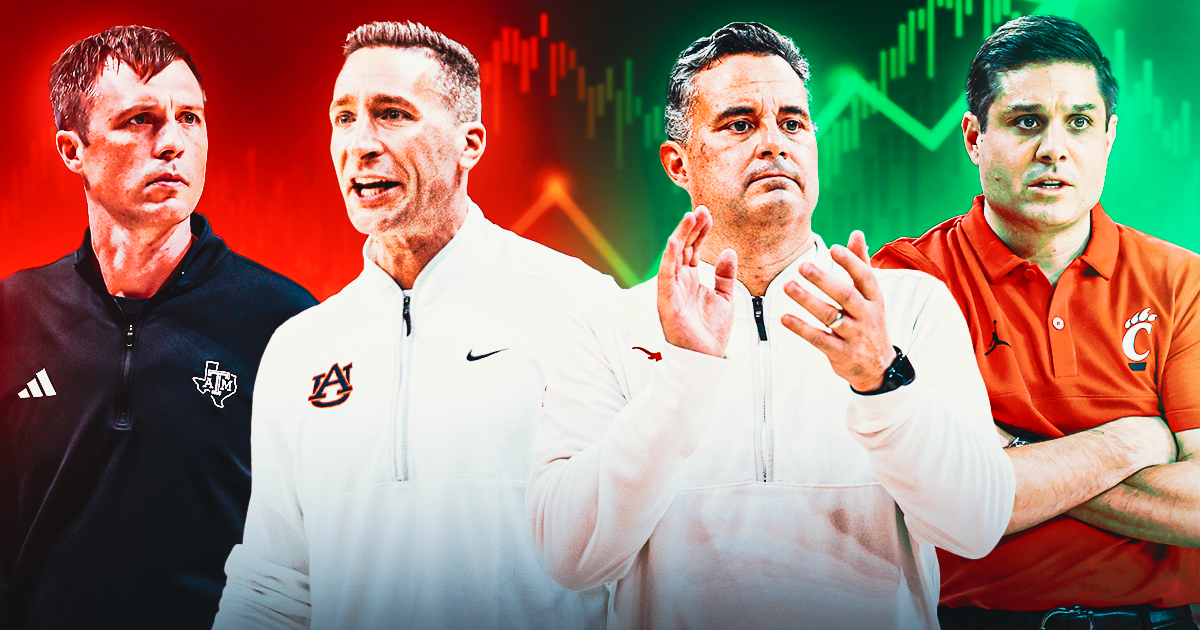
The NCAA Tournament bubble shifts again as another week of results reshapes the 2026 bracket picture. With conference play tightening and limited opportunities remaining, every result carries weight. Teams projected as an 8-seed or better are generally safe, while those hovering on the 9-line cannot afford missteps. Programs outside the Next Four Out still have significant work ahead. Here is a look at the biggest stock movers on the bubble. 📈 Stock up Texas: After barely scratching its way into the conversation in January, Texas has surged into a far more comfortable position thanks to a five-game winning streak. Wins over Oklahoma, South Carolina, Ole Miss, Missouri, and LSU have steadied the résumé. While the stretch came against one of the more manageable SEC runs, the Longhorns capitalized. With Georgia and Florida looming, Texas has an opportunity to solidify its standing and move further from the danger zone. Cincinnati: Once appearing finished, Cincinnati has clawed back above .500 with three straight Big 12 wins over UCF, Kansas State, and Utah. The Bearcats still sit on the wrong side of most projections, but they are trending upward at the right time. A rested showdown with Kansas presents a major résumé opportunity, followed by another chance against Texas Tech. The margin remains thin, but momentum is finally on their side. VCU: VCU continues to hover around at-large consideration despite not currently owning the Atlantic 10's projected automatic bid. The Rams are riding a 10-game conference winning streak, keeping them squarely in the conversation. A key matchup with St. Louis offers a legitimate résumé builder before the regular season winds down. With just a few games left, VCU is positioning itself for either a strong at-large push or a dangerous conference tournament run. 📉 Stock down Auburn: A four-game losing streak against Tennessee, Alabama, Vanderbilt, and Arkansas has dropped Auburn toward the bubble's edge. Once safely positioned, the Tigers now face mounting pressure. Upcoming games against Mississippi State and Kentucky offer chances to halt the slide, but continued struggles could push them fully into bubble territory. Baylor: Baylor's analytics have carried it longer than its record suggests, but a loss to Kansas State dropped the Bears to .500 overall. The margin for error is gone. Arizona State provides a needed bounce-back opportunity, while Arizona looms as a critical résumé test. Texas A&M: Not long ago atop the SEC standings, Texas A&M now finds itself reeling after four straight losses to Alabama, Florida, Missouri, and Vanderbilt. The Aggies must rediscover their early-season form quickly, starting with Ole Miss and Oklahoma, or risk tumbling deeper into the bubble conversation. See the full tournament projections by conference. |
|
|
College basketball hot seat: Latest updates at LSU, Syracuse, South Carolina & more |
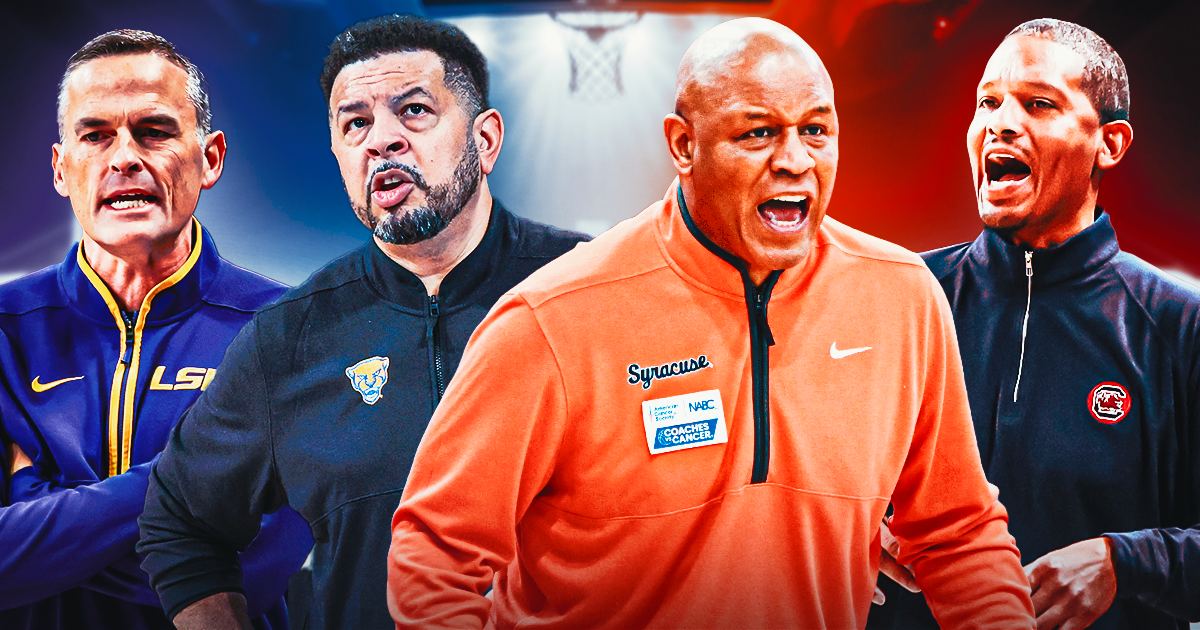
College basketball's coaching carousel has officially started spinning. In the past four days alone, Kansas State fired Jerome Tang in a potentially messy situation, and San Diego parted ways with Steve Lavin. As March approaches, pressure is mounting around the country. Here is the latest on several notable names facing uncertain futures. Matt McMahon, LSU (14-12, 2-11 SEC) In his fourth season in Baton Rouge, Matt McMahon might be on the hottest seat in college basketball. LSU finished 3-15 in the SEC in 2024, and through the 2025-26 season, it hasn't looked much different. Despite bringing in a transfer portal class that created some hope, the Tigers have just two SEC wins and have dropped four consecutive games. It would surprise many across college basketball if LSU decides not to make a move this spring. McMahon would be owed $6.5 million. Bobby Hurley, Arizona State (14-12, 5-8 Big 12) Bobby Hurley has faced mounting pressure multiple times with the Sun Devils, yet he has consistently found ways to survive. It is unclear if that will continue this time. Despite an upset win over Texas Tech earlier this week, Arizona State sits at 5-8 in Big 12 play and remains a long shot for an NCAA tournament run. Hurley is in the final year of his contract and has made just one NCAA tournament appearance in the last six seasons. The decision now looms larger than ever in Tempe. Lamont Paris, South Carolina (11-15, 2-11 SEC) Lamont Paris signed a contract extension through 2030 in March 2024 after being named SEC Coach of the Year. Since that breakout season, though, South Carolina has struggled to win games and now sits at 2-11 in SEC play. Athletic director Jeremiah Donati must decide this spring whether to buy out Paris, a move that would cost around $10 million. Ed Cooley, Georgetown (13-13, 5-10 Big East) Cooley left Providence with the expectation of reviving Georgetown. Three seasons in, the Hoyas have yet to make the NCAA tournament or win 20 games under his leadership. While the expectation remains that Cooley returns for Year 4, the pressure is real. Georgetown has the resources to compete, but consistent Big East contention has not materialized. Jeff Capel, Pitt (9-17, 2-11 ACC) Jeff Capel is in his eighth season at Pitt and has made just one NCAA tournament appearance. With two ACC wins and five straight losses, postseason hopes appear gone. The Panthers also suffered nonconference losses to Hofstra and Quinnipiac. The larger question is financial. Pitt's buyout terms are private, but sources indicate the number is steep and could complicate any decision. That reality makes Capel's situation one of the more fascinating storylines as March nears. See the full list of hot seat coaches here. |
|
|
Wasserman: Pushing for softer schedules will backfire on and off the field |
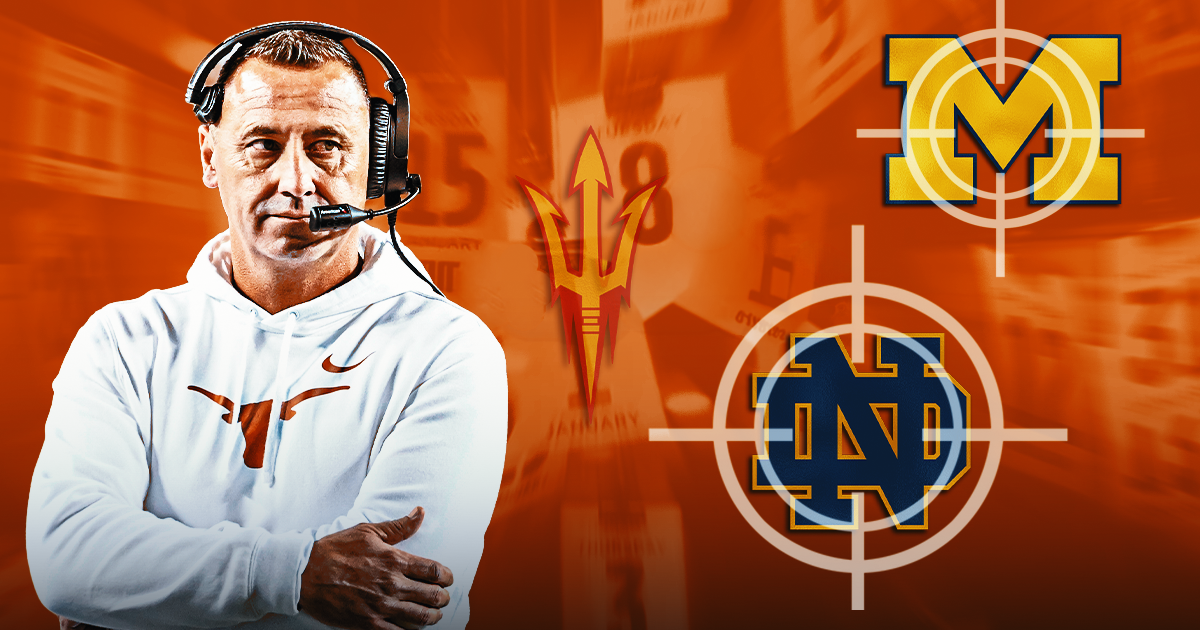
Texas has reportedly canceled its 2032 and 2033 home-and-home series with Arizona State (and Andy Staples had some strong thoughts on the decision). The move comes as the SEC shifts to nine conference games, forcing scheduling adjustments across the league. Texas still has marquee matchups ahead, including Ohio State this season and future series with Notre Dame and Michigan. Yet when the Arizona State series was called off, some Texas fans called for even bigger games, like the Notre Dame home-and-home in 2028 and 2029, to be scrapped as well. Texas is not alone. Alabama, which is reportedly considering canceling a future date with Ohio State, saw similar fan reaction. In both cases, some supporters are actively rooting against nationally televised, high-stakes nonconference games because of the perceived risk to College Football Playoff chances. They would rather avoid the possibility of a loss than embrace the reward of a defining moment. That is like going to a blockbuster film and demanding low-budget special effects. It makes no sense. So how did we get here? The prevailing talking point is that the CFP Committee does not value high-quality wins and instead focuses too heavily on losses. That narrative is not supported by history. The Committee has traditionally rewarded big wins and strong schedules. Yes, the last three national champions did not play marquee nonconference games. But what happened recently is not a permanent blueprint. Still, Texas' situation illustrates the tension. The Longhorns built a CFP-worthy résumé last season with wins over three top-15 teams: Texas A&M, Oklahoma, and Vanderbilt. The problem was three losses, including a road defeat at Ohio State in the opener. Had Texas replaced the Buckeyes with a Group of Five opponent, they likely finish 10-2 and make the Playoff. That reality fuels the new "blueprint": duck strong nonconference opponents, avoid losses, and attempt to punish the Committee for excluding tougher résumés. But that logic undercuts the sport itself. Fans would be advocating for worse games, diminished viewing experiences, and fewer lasting memories. They would pay to watch blowouts rather than risk a loss in a game that could define a season. And they would spend months hoping their team avoids slipping up against weaker opponents. The idea that the CFP Committee ignores quality wins is a myth. A soft 10-2 résumé still invites scrutiny. Ask Vanderbilt how that worked out. Fewer crossover matchups also remove context for the Committee. Without interconference data points, decisions become more subjective, not less. Every season is its own entity. You cannot simply copy Indiana's 2025 schedule or Ohio State's 2024 slate and expect identical results. Those teams went undefeated and likely would have survived an additional loss. A different year, with a different pool of contenders, produces different outcomes. This is not an attack on Texas or Alabama. It is a critique of the broader notion that weaker schedules benefit teams or fans. Big wins still matter in the committee room and on the field. The better path is simple: keep the tough games. Schedule more of them. Competition is the entire point of sports. Read the full story from Ari Wasserman. |
|
|
Below, you'll find 3 facts about a random college football player. You'll try to guess who the player is based on the facts. Let's go. I burst onto the scene as a true freshman in the SEC, rushing for over 1,600 yards and leading my team to a national championship.
- I won the Heisman Trophy in 1982 and finished my college career as one of the most dominant running backs in the history of the sport.
- After college, I competed for the US in the 1992 Winter Olympics as a member of the bobsled team, in addition to my professional football career in both the USFL and NFL.
Answer at the bottom. |
|
|
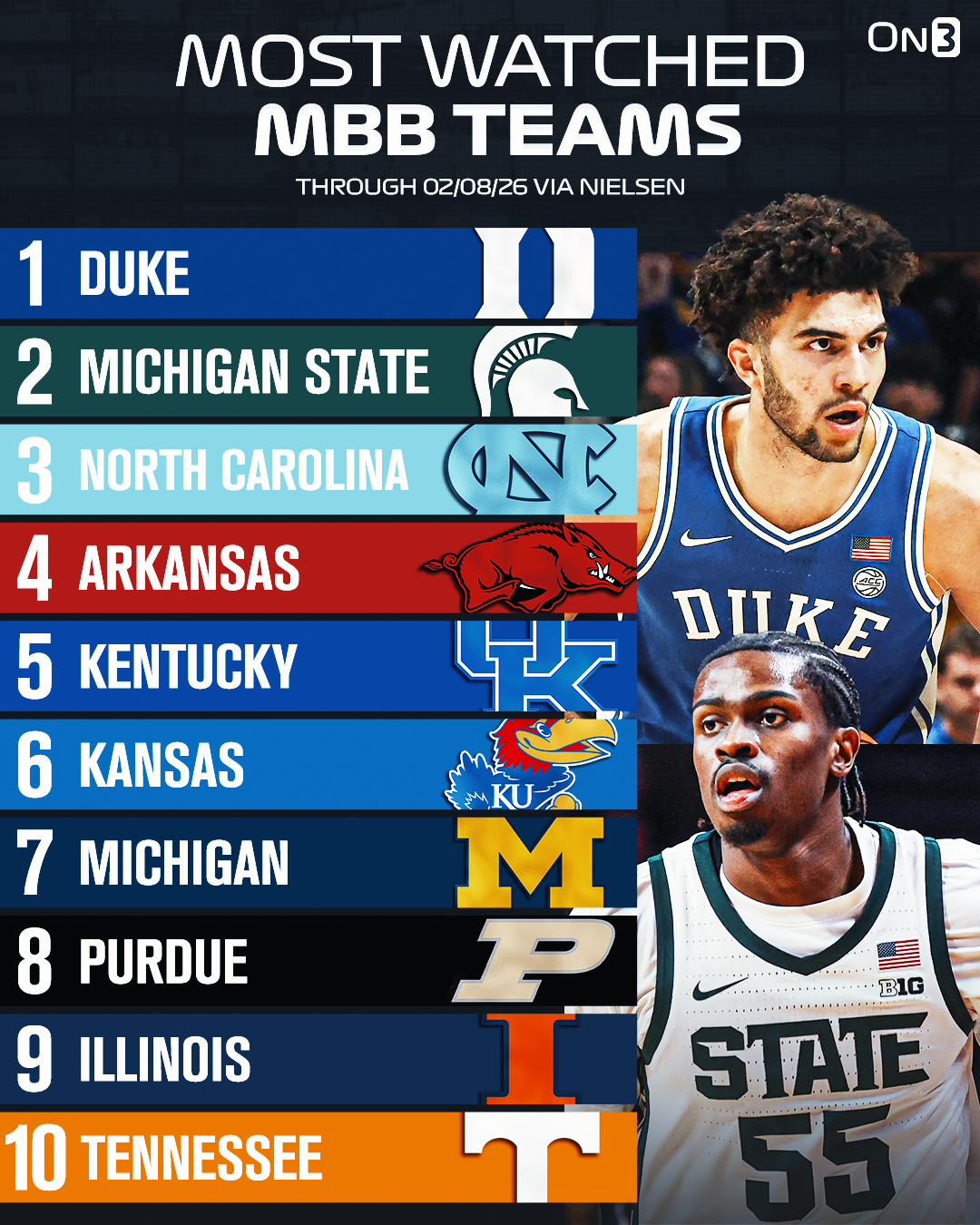
The most-watched men's college basketball teams |
|
|
🐶 Herschel Walker, RB, Georgia Bulldogs (1980-1982) |
|
|
Join now to unlock the best of college and high school sports from our trusted team of insiders. Join for $19.99. Cancel anytime. |
|
|
Not subscribed to On3? Subscribe here for all the news and analysis from our network of insiders. |
2970 Foster Creighton Drive, Nashville, TN 37204 |
©2026 On3 Media. All rights reserved. |
|
|
|





Ni komentarjev:
Objavite komentar