I n the Victorian era, wallpaper could — and sometimes did — kill. The culprit was in the colors — specifically, a set of wildly popular pigments known as arsenical greens. Beginning in the late 18th century, chemists |
|
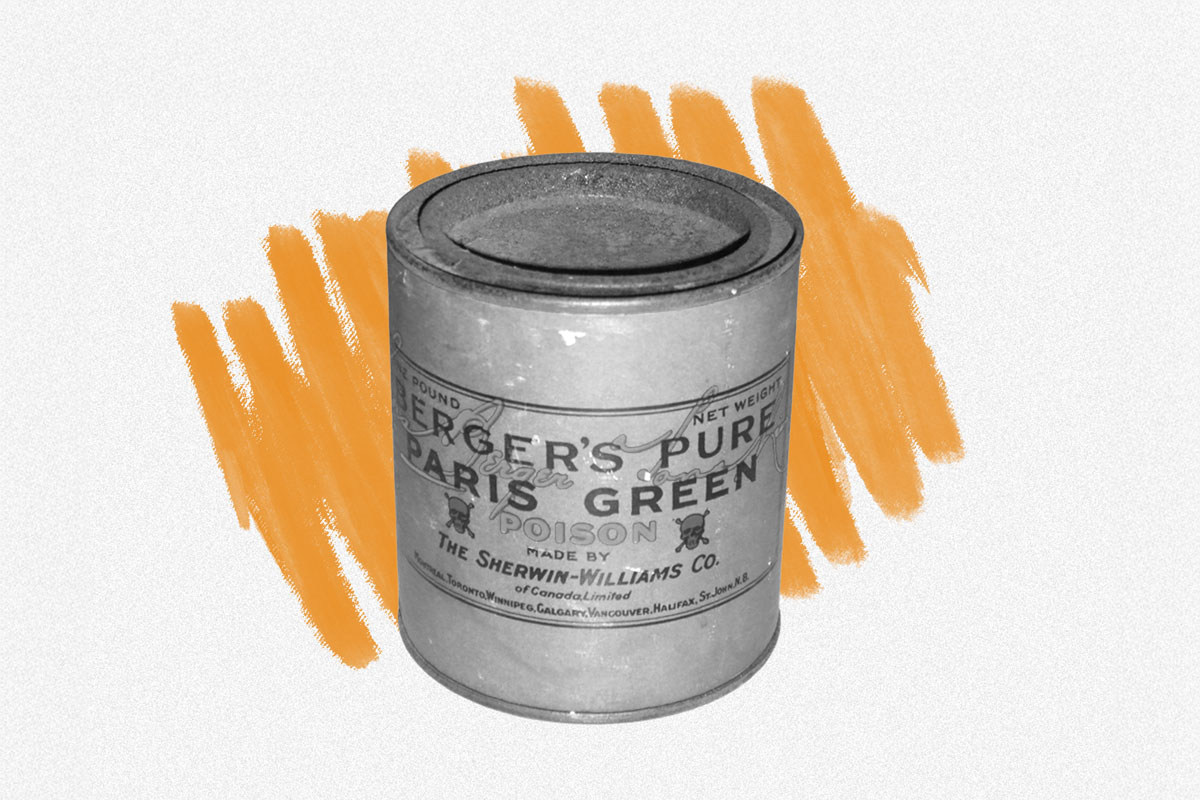
discovered how to make vivid green dyes from copper arsenite. The first, Scheele's Green, was invented in 1775 by German Swedish chemist Carl Wilhelm Scheele. It was followed in 1814 by a brighter, more durable version often called emerald green (also known as Schweinfurt green, Paris green, or Vienna green), invented by German industrialist Wilhelm Sattler. Both contained arsenic — and both became fashionable favorites. |
By the mid-19th century, Britain was producing tens of millions of rolls of wallpaper each year. Thanks to new printing technologies (and gas lighting that replaced candles), brightly colored papers could decorate even modest homes. Lush, leafy patterns in brilliant green became especially trendy, embraced by designers associated with the Pre-Raphaelite and Arts and Crafts movements. Not all wallpaper was toxic, but papers printed with arsenical pigments posed real risks. |
Arsenic was hardly a secret poison. Victorians used it to kill rats and were well aware it could be deadly if swallowed. Its toxicity has been well known since ancient times, in fact. But many manufacturers insisted that arsenic bound up in wallpaper pigment was harmless unless someone literally licked the walls. Still, some critics suspected otherwise. Doctors in Britain and the United States began reporting mysterious illnesses linked to rooms papered in green; women and children seemed especially susceptible. In moist conditions (read: most of England), arsenic pigments were particularly harmful because they could produce toxic fumes in the form of arsenical gas. Pigment also flaked off the wallpaper and settled into surrounding dust. |
Wallpaper wasn't the only problem. Arsenical greens colored dresses, artificial flowers, children's toys, candles, sweets, and even food wrappers. One 19th-century household guide, Beeton's Housewife's Treasury of Domestic Information, warned against "brilliant green" for its "pernicious influence on the health." |
Public anxiety grew, and although some designers dismissed the "arsenic scare" as hysteria, consumer pressure gradually forced manufacturers to abandon the pigments. Victorian wallpaper didn't always kill — but when it shimmered an irresistible emerald, it sometimes carried a hidden, deadly cost. |
|














Ni komentarjev:
Objavite komentar